
 Food, drink, and very good company will be available from 19.00 at the Pitchside Bar courtesy of our sponsors ITIL.
Please do join us there if you arrive on Sunday – we’d love to meet you before the busy conference agenda commences and it’s a great opportunity to network with industry colleagues.

itSMF UK Chair Claire Drake welcomes attendees and discusses recent developments in service management. Followed by Graham McDonald and Mark Lillycrop who will provide an update on itSMF UK member services and preview the conference.

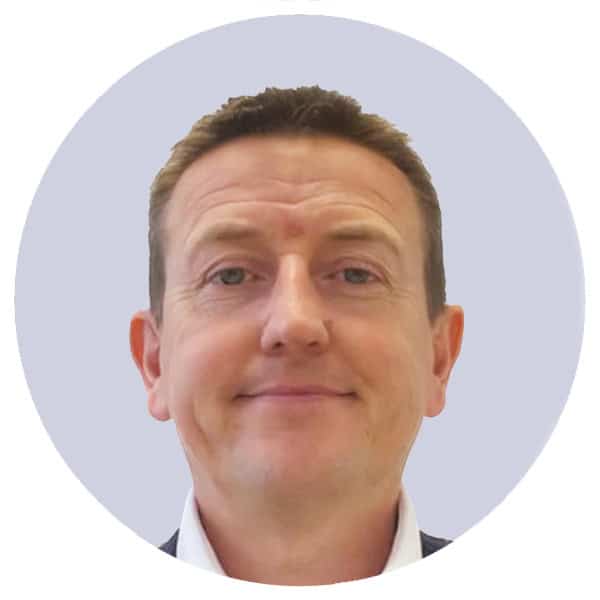

Felicity Ashley isn’t just an inspiring speaker – she’s a business-critical voice for today’s corporate leaders. What makes her truly unique is not only the fact that she rowed 3,000 miles across the Atlantic while unknowingly battling cancer, but also her rare combination of real-world leadership experience and personal resilience.
With over 20 years of leading marketing for major global brands, Felicity brings first-hand insights on high-performance leadership, managing change, and navigating uncertainty.
She has worked with top-tier clients such as Barclays, Salesforce, Aston Martin, Centrica, National Grid, Santander and Publicis, helping leaders transform their teams and thrive in times of change.
In May 2025, she marked three years since her cancer diagnosis by completing the world’s highest marathon at Everest Base Camp, and in June 2026, she will row 2,800 miles across the mid-Pacific becoming one of fewer than 10 women to have rowed two oceans.

Duncan Stirling, BT BusinessTrack 1
Fail to prepare, prepare to fail… a phrase that is used across service management, but is most appropriate to the Service Continuity practice. This session shows that Service Continuity is critical across all existing areas, but also across the newer core markets such as cyber security and AI. It considers how we move from viewing the practice as an insurance policy (we all have them but object) to something that genuinely adds value to the business.

Marida Lotz-Henning, Computacenter UKTrack 2
During H1 2026 the itSMF UK Change Special Interest Group came together for a first time to review what Change Enablement looks like today, what our challenges are, and where we would like to be. Join us for an honest discussion as we evolve our practice.

Rob Akershoek, The Open Group/DXCTrack 3
Let’s face it—the CMDB has been a challenge for years. Fragmented data, limited visibility, and incomplete service models prevent organisations from truly understanding their IT landscape. As a result, managing value, risk, and cost—and answering basic questions—is difficult. What services do we have? Where are they running? What do they cost? Are we compliant? Meanwhile, IT environments are becoming more complex, with more services, integrations, and continuous change. A reliable data foundation is essential to deliver faster, operate safely, and control costs.
The CMDB of the future is AI enabled —sometimes called the Service Graph or Digital Twin—and must provide accurate, end-to-end visibility and integrate with the Enterprise Architecture repository, CI/CD pipelines (with the Software Bill of Materials / SBOM), SecOps for vulnerabilities, FinOps, etc. Join this presentation to learn how to build a modern CMDB that is integrated, reliable, and designed to support effective end-to-end management of your digital products and services.

Suzanne Galletly, EXIN and Chevonne Hobbs, CGITrack 4
Let’s be honest, we’re all guilty of it: jumping on the AI bandwagon. Who can help it when the possibilities seem endless? But the reality is that AI initiatives often fail to deliver the promised value and ROI. So, what’s going wrong? Why have we ended up with a messy landscape instead of the promised land? And how can we help professionals to turn AI investments into value whilst protecting them from the harmful effects of AI?
In the session you will learn:
• How to ensure a structured approach to AI as opposed to just jumping on the bandwagon
• How to enable professionals to thrive and create value in a world of AI
• How to prevent AI fatigue and protect mental fitness.

Keith Reeves, Digital Health and Care WalesTrack 1
DHCW’s journey to procure a modern ITSM platform was only the beginning. With the contract signed and the excitement settling, the organisation now faces the real challenge: turning a carefully crafted specification into a working, scalable solution for NHS Wales.
In this follow up session to his presentation at ourour ITSM Tooling Case Study Day, Keith Reeves lifts the lid on the next chapter of DHCW’s multi year transformation — the implementation of its newly procured ITSM platform. Building on the foundations laid during procurement, he’ll explore how DHCW is moving from planning to delivery, including:
• establishing the governance, structures, and partnerships needed to support a national scale implementation
• translating requirements and specifications into real world configuration and design decisions
• engaging teams across the organisation to ensure adoption, alignment, and readiness
• navigating the inevitable surprises, constraints, and “didn’t see that coming” moments that arise once implementation begins.
You’ll gain candid insights into what it takes to implement a modern ITSM solution in a complex health environment, the lessons learned so far, and how DHCW is ensuring the new platform becomes a catalyst for broader service management maturity across NHS Wales.

Karen Brusch, MastercardTrack 2
Is it possible for the worlds of Product and Service to meet? Learn how Service Design can make a real difference in bringing the two together. Discover how you can make Service Design agile@scale to support the Product world.

Aaron Perrott, KTSLTrack 3
This session will cover the fundamentals of edge computing. An estimated 50% of data is processed at the ‘edge’ with over 200 billion spent on edge compute. This session looks at what it is, the importance of IOT, the growth in the sector and how - from a service management perspective - we can support, leverage and ensure we have control.

Amanda Doyle and Fiona Benoist, Irwin MitchellTrack 4
In 2023, Irwin Mitchell transformed a long standing challenge – poorly managed, space consuming retired IT assets – into a flagship circular economy success story. By partnering with specialist provider N2S, the firm introduced a secure, compliant, zero landfill process that prioritises reuse, material recovery and social value.
More than 11.6 tonnes of legacy equipment have now been processed, with 50% reused and the remainder recycled, avoiding 379 tonnes of CO₂ and generating over £75,000 for digital inclusion projects – doubled to £150,000 through IM Charities Foundation match funding. These funds are already enabling critical digital literacy programmes, cancer patient support platforms, and upgraded IT suites across IM's former charity partners (Maggie’s, Teenage Cancer Trust and the National Literacy Trust).
This session shares the practical steps, governance, procurement approach and cultural shifts behind this award winning initiative – demonstrating how sustainable IT lifecycle management can simultaneously reduce environmental impact, release value, and deliver meaningful community outcomes.

Collect your lunch in the networking area and join the conversation with other delegates.
Dan Newton and Gillian Hitchenes, Norman/Northumbria UniversityTrack 1
Our session is grounded in our work at Norman, part of Northumbria University and the higher education sector’s largest shared service, supporting over 40 universities.
We will take you behind the scenes of Ember, an AI colleague embedded within our service that holds natural conversations, understands context, and knows when to act and when to step aside. We will show how we moved away from technology-led requirements and instead designed Ember as a human colleague.
We will share how tone, behaviour, and judgement are shaped using frontier AI models and tested in our simulation environment before reaching real users. We’ll also demo some internal R&D, including screen sharing with Ember and a Geordie speech model built for real-time natural conversations, showing how AI can be experience-led and genuinely useful.
The session offers a rare, inside view of AI designed to improve support, not just automate it.

Ed Fletcher, AtkinsRéalisTrack 2
Delivering user value and not just project milestones is key to any successful IT delivery. In this session, Ed Fletcher, an experienced Scaled Agile Practice Consultant with experience across telecommunications, publishing, construction and government, will explore how a product focus within a project will deliver a better customer outcome than a traditional project.
If you need to deliver a live service that will continue to exceed your customer's expectations, this presentation will provide you with some techniques and examples to help you succeed. Delegates will leave with an understanding of:
Examples will come from both commercial and government sectors and focus on getting a live product into the hands of the customer - including negotiating the sometimes-challenging transition from a development project to a live service.

Claire Agutter, ScopismTrack 4
In a relay, you can put four of the best athletes in the world on the track and still lose the race. This session uses the “dropped baton” concept to explain why multi-supplier IT can fail end-to-end, even when each provider is hitting their own targets. Integration debt builds up when tickets bounce, incidents stall, changes collide, and everyone optimises their own leg of the race rather than focusing on the finish line.
This session will show how adopting SIAM principles helps teams identify where the handover zones really are, and how to pass the baton cleanly. Attendees will leave with a practical view of what good hand-offs look like in a SIAM model, and five interventions to try immediately without needing a big-bang change or transformation programme.

David Heaps and Danielle Dilley, Vodafone/VOISTrack 1
The initiative focused on digitising and automating change processes in collaboration with digital DEVOPS to reduce manual effort, increase accuracy, and facilitate increased digital releases… from 5 a day to 500 a month

Katrina Macdermid, HIT GlobalTrack 2
IT service management was never originally designed around experience. It was designed around control, repeatability, efficiency, and risk reduction. And it has been highly successful in doing exactly that. So what happens when organisations try to make IT “more experience-driven” inside systems that reward speed, closure, and compliance?
This session explores the growing tension between operational excellence and lived experience. It challenges the idea that experience can simply be layered onto existing practice, and examines why many well-intended initiatives struggle to shift perception.
Rather than positioning experience and IT service management as opposites, this talk explores how to reconcile them — realistically, structurally, and sustainably.

Markus Bause, PeopleCertTrack 3
As the organisation responsible for ITIL, PeopleCert continuously analyses global service management trends through independent studies, surveys, the 2025 AI in ITSM Tools report, the ATV programme, and insights from thousands of practitioners worldwide. This session distils that evidence into a clear, practical view of how AI is reshaping service management.
We explore how automated triage, AI-generated knowledge, anomaly detection, virtual agents, intelligent workflows, and emerging agentic capabilities are already transforming ITIL practices. More importantly, we examine what differentiates successful adopters from those struggling to realise value.
This is not a product pitch, but a research-driven perspective on what is truly changing — and what is not. Attendees will gain actionable insights into how AI is influencing the evolution of ITIL guidance, how to avoid common adoption pitfalls, and how to position their organisations for sustainable, value-driven AI-enabled ITSM.

Paul Brandvold, CegalTrack 4
In IT service management, we tend to believe that strong expertise should naturally lead to influence. If we understand the framework, design solid processes, and build mature governance, our ideas should carry weight. But many experienced ITSM professionals still find that their recommendations stall, their initiatives lose momentum, and their voice does not always reach the right rooms.
The gap is rarely technical. It is perceptual. Influence in ITSM is shaped not only by what we know, but by how that knowledge is understood, trusted, and experienced by others. Authority is often formed long before formal decisions are made.
This session explores why expertise alone does not guarantee influence, and what ITSM professionals can do to close that gap. Attendees will gain insight into:
• Why strong competence does not automatically create authority
• How perception shapes credibility inside organisations
• The role of visibility, clarity, and consistency in professional influence
• Practical ways to strengthen your impact without relying on title or hierarchy
• How both seasoned practitioners and emerging professionals can leverage their existing strengths as an unfair advantage.
This session is designed for practitioners, service managers, and ITSM leaders who want their expertise to translate into traction, adoption, and meaningful impact.

Faith Thomas, University of BirminghamTrack 1
At the University of Birmingham we discovered that much of the friction in our services came from debt that no one had formally named, recorded or owned. Teams were working around long standing constraints, while newer workarounds were quietly accumulating.
This session shares our journey in making that invisible load visible. We tell the story of how we defined two clear types of debt, technical and legacy, and how that simple distinction helped our people understand the real weight of what they were carrying. By turning debt into data rather than background noise, we created a shared language that supported better prioritisation, leading to improved governance and more confident decision making.
By the end of this session, attendees will be able to:
• Understand the difference between technical debt and legacy debt using a real world example
• Apply simple methods to identify and record debt within their own organisation
• Integrate repayment planning into design, release and change
• Use debt data to support clearer conversations, stronger governance and better strategic choices.

Jaro Tomik, Buvalo LtdTrack 2
Immerse yourself in the world of the Pre-Crime Unit in Minority Report that predicts and prevents crimes before they happen. Only this time, it’s Zero Ticket that predicts and resolves IT issues before users even notice.
You may have come across Zero Ticket 10 years ago as a way to minimise the number of tickets at the service desk using a Shift Left approach, making the end users do the work. Phone lines and emails were switched off, forcing end-users to deal with confusing portals and frustrating chatbots. This added burden has led to technology teams being seen as cost centres rather than drivers of innovation.
In the age of AI-powered advanced monitoring, data analytics and correlation, self-healing, and human-centred design, Zero Ticket is undergoing a renaissance. IT is quickly running out of acceptable excuses. If your end-user has to raise a ticket, you have already failed them.
This presentation will enable technology leaders to understand the Zero Ticket vision, how it can be applied to their organisation, the steps needed to achieve it, and how to enable their teams to focus on what truly matters: delivering business value.

Chris Pope, AutomateProTrack 3
Modern ITSM SaaS platforms promise speed, scale, and continuous innovation, but DevOps and CI/CD only deliver value when they’re built on strong platform fundamentals and paired with effective Organizational Change Management (OCM).
In this session, we’ll explore how automation-first DevOps on a modern ITSM platform accelerates release velocity, improves quality, and reduces operational risk without overwhelming users or fragmenting ways of working. We’ll unpack why getting the basics right (standard configuration, testing, governance, and release discipline) is critical before scaling CI/CD, and how OCM turns technical capability into real adoption.
Attendees will leave with practical guidance on aligning platform engineering, automation, and change leadership to reduce time to value, drive user confidence, and ensure DevOps becomes a business accelerator not a source of complexity.

Simone Moore, Humanising IT and Vawns Murphy, i3WorksTrack 4
The most important decisions in your organisation are rarely the visible ones. There's been an incident. Something felt off — a rushed decision, a workaround, a metric that quietly stopped meaning anything. No body. No blood. But something didn't survive the trade-off.
Sassy CRIMES puts that invisible layer under investigation. The evidence is everywhere: misaligned incentives, cognitive overload, performative metrics, silent burnout, ethical blind spots in AI adoption, and governance theatre that looks impressive on paper but fails people in practice. AI didn't commit this crime — it reveals it.
Using the CRIMES Lens, we dust for prints, follow the pattern, and move from ethical tension to conscious stewardship — turning exposure into insight, not to convict, but to change how we choose. Come find the murder weapon. Chances are, you're holding it.

Munir Patel, ITVTrack 1
When millions rely on your services in real time, there is no tolerance for disruption. This presentation will show how structured service management enables resilience, control, and performance during high-visibility, high-demand national and global events. It covers operational readiness, major incidents, disciplined change governance, and coordinated vendor management—all under intense scrutiny.
More than a tournament case study, this presentation will give a cross-industry blueprint for managing risk, maintaining stability, and ensuring service excellence when the stakes are at their highest.

Darron Prince, Capital OneTrack 2
Stop relying on unplanned failures and large-scale disaster recovery activities to learn. This session will explore a fundamental organisational and mindset shift toward conscious reliability testing and always-on technical and organisational preparedness.
The goal is to move beyond mere compliance and build a culture of "reliability assurance." ITSM professionals will gain practical insights for implementing this new mindset, helping their teams go beyond standard incident response and DR exercises that do not replicate real-world scenarios.

Juha Berghäll, CEO & Co-Founder, ONEiO & Petra Heine-Brach, Managing Partner, PETE TechnologiesTrack 3
In a complex, multivendor environment, a leading UK retailer needed to automate integrations between its IT service management (ITSM) platform and multiple internal business functions while progressing toward a Service Integration and Management (SIAM) operating model. This customer story shows how integrations were delivered as a fully managed service, enabling end-to-end automation across a wide ecosystem of vendors, including platform providers, wide area network (WAN) providers, and global communication network (GCN) providers. You’ll learn what changed operationally, how reliability and security were handled, and which choices improved resilience and scalability without increasing in-house integration workload.

Juan Manuel Espinoza, AxiansTrack 4
Enterprise Service Management (ESM) is no longer a trend, it’s a necessity for organisations seeking agility, efficiency, and cross-functional collaboration. This session introduces #TheESMGuide, the first structured model for implementing ESM beyond IT, aligning governance, culture, and technology under a unified approach.
Attendees will discover how to expand ITSM principles to HR, finance, and other business areas, using a methodology that is adaptive, robust, transversal, and expandable. Through real-world cases and practical steps, we will explore how ESM drives measurable business value, improves customer experience, and fosters organisational resilience.
Join us to learn how to transform service management into a strategic enabler for your entire enterprise!

Sophie Hussey, Lapis Consulting ServicesTrack 1
Ever wonder why a service catalogue matters or how to make it more than just a list of services? This practical, engaging session will show you how to turn your catalogue into a powerful tool for clarity, efficiency, and customer experience. We’ll break down what a service catalogue really is, why it’s essential for modern service management, and how to apply it in ways that deliver real value.
Through real-world examples and actionable insights, you’ll learn how to make your catalogue work for your organisation, not just sit on a shelf. Whether you’re new to the concept or looking to refine your approach, this session will give you the confidence and know-how to make it matter.
Key takeaways:
Join Sophie Hussey to unlock the hidden potential of your service catalogue and transform the way you deliver services.

Simon Powell, AtkinsRéalis and Caroline Harding, UK Civil ServiceTrack 2
The itSMF UK Armed Forces Defence Community of Practice (CoP) has been relaunched as the Defence CoP, with a new wider mission: to bring together service management practitioners from across the Ministry of Defence, the armed services, defence industry partners, integrators, and suppliers to elevate capability, share hard won lessons, and advance best practice across the entire defence ecosystem.
In this session, Simon Powell, the Chair of the Defence CoP will introduce the community’s refreshed purpose, strategic direction, and expanded scope, highlighting how the rebrand reflects the evolving needs of modern defence service management. Attendees will gain insight into the CoP’s new collaboration approach, including cross-organisation working groups, knowledge sharing initiatives, and alignment with emerging frameworks, standards, and digital transformation priorities across defence.
Joining Simon on stage will be Caroline Harding, Digital Enterprise Operations Policy Lead for the MOD, offering a strategic MOD perspective on why a strong, unified service management community is essential to delivering operational effectiveness, accelerating digital programmes, and strengthening partnerships with industry. This joint viewpoint underscores the critical relationship between defence organisations and the supplier ecosystem, and the importance of shared language, shared practices, and shared outcomes.

Anushka Odedra and Lavender Bansal, BarclaysTrack 3
Discover how observability plus GenAI transforms incident and problem management, from faster triage to true prevention. We’ll showcase data backed techniques and tools like Now Assist and Observe that cut major incidents while proving value to stakeholders. If you’re measured on uptime, recovery and incident recurrence, this session will give you proven ways to improve each.

David Barrow, Sol Seven StudioTrack 4
Service management has become increasingly confident in how we describe co-creating value within organisations, across teams, suppliers, partners, and technologies… And yet some of the most meaningful value in our profession is created beyond organisational boundaries. It's created through communities.
This session draws on lived experience from over three decades in IT service management, including past mistakes, moments of reflection, and the course corrections that followed. It explores how professional communities support learning, confidence, mental well-being, and inclusion in ways formal structures often cannot.
The session also confronts an uncomfortable reality: in the UK, around a quarter of households (26%) have difficulty affording communications services, yet as a profession, we continue to accelerate towards AI-driven services while the socio-economic divide widens. This raises important questions about access, exclusion, and responsibility.
By blending lived experience, reflection, and service management principles, the session challenges attendees to rethink value co-creation, human-centred service management, and the role communities play in building a more inclusive, resilient, and ethical profession.

Join this year's award nominees at our gala dinner, where we highlight the achievements of IT service management individuals and teams, whose skills, commitment and imagination have marked them out for special recognition.
Sponsored by
Maisie Adam is a comedian, writer and broadcaster from Yorkshire, widely regarded as one of the brightest rising stars in British comedy. With her sharp observational style, quick wit and warm, self-effacing delivery, she has built a reputation as a standout performer both on stage and on screen, as a solo performer and as a regular on panel shows and podcasts.
An award-winner early in her standup career, Maisie has become a familiar presence on television. She has appeared on shows including Live at the Apollo, A League of Their Own, Mock the Week, and Have I Got News for You, and she was the champion of series 20 of Taskmaster.
Maisie also co-hosts the award-winning podcast Big Kick Energy with friend and fellow comedian Suzi Ruffell. Celebrating women’s football through humour and accessible analysis, the show was named Sports Podcast of the Year at the Sports Broadcast Awards just five months after launching.

Laura Ellis is a technologist, journalist and keynote speaker on AI, with a focus on emerging technology, machine learning, disinformation, and data.
Laura has worked on news teams in radio, TV, and online and led two regional news and current affairs teams through significant technology change, establishing the BBC’s first end-to-end digital newsroom.
In her current role she focuses on ensuring the BBC is best placed to take advantage of emerging technology and takes a particular interest in ethics, personalised and automated journalism, machine learning, generative AI and media provenance.
Laura is a popular speaker on how to onboard AI as a society and in industry and on managing technological change and leadership.

Enrique Prieto Labrador and Jogi Sharma, IAG TransformTrack 1
A practical blueprint for turning service onboarding into a scalable, automated, and governance-led capability.

Mickey Kavanagh and Pete Gronow, BupaTrack 2
Bupa’s Frictionless Delivery Journey explores how Technology Operations has evolved to support transformation at pace—reducing friction, scaling delivery, and improving outcomes. We’ll share what we’ve changed over the past year, how a platform-led approach is enabling teams, and the real impact this has had in practice.
The session will cover:
This is a practical, honest account of what happens when you fundamentally change your IT operations during an ambitious strategy.

Akshay Anand, Director, Process ExcellenceTrack 4
Careers are often described as ladders, but in practice they can feel more like a series of cliff faces that need to be climbed - each one demanding new behaviours, new perspectives and, sometimes, the willingness to let go of what previously made us successful. Many capable professionals struggle not because they lack ability, but because they have not been prepared for the psychological and practical demands of these transitions.
The move from education into the workplace is many professionals’ first encounter with this reality. New graduates must quickly learn the limits of acceptable failure, and learn to navigate complex workplace dynamics. Later, the transition from individual contributor roles into management introduces an entirely different challenge: success is no longer measured solely by personal output, but by the performance, wellbeing, and development of others. The shift from manager to director presents an even more profound recalibration, letting go of operational involvement and coming to terms with ambiguity, influence without direct control, and long-term strategic thinking.
Drawing on real-world experience and relatable scenarios, this session examines the common mindset traps, capability gaps, and identity shifts that accompany career progression. We explore the hidden transitions that shape professional growth, from early career entry through to senior leadership. Rather than asking whether promotion is deserved, this session asks a more important question: are you truly ready for what comes next?

Sarah Foley, AegonTrack 1
After four years operating an enterprise-scale service catalog, one lesson stands out: early decisions have long-term consequences. This session offers a hindsight-driven look at what we would do differently if we were building our service catalog today. It goes beyond theory to share real lessons from governance mistakes, architectural shortcuts, and well intended choices that didn’t age well.
By sharing the cost of our hindsight, we aim to help others avoid learning the hard way. Attendees will gain a realistic view of long-term catalog maturity, a practical checklist of design and governance pitfalls to avoid, a clearer approach to balancing flexibility with control, and greater confidence to make smarter, more sustainable decisions in year one.

Alex Cosma, Square EnixTrack 2
As Enterprise Service Management matures, the role of the service leader has reached a breaking point. We are held accountable for the total experience, yet we possess zero formal authority over the cross-functional teams delivering it.
Drawing on 20 years of global leadership and conflict resolution, Alex looks at moving beyond the technical "how-to" of ESM and dives into the political "how-to" of influence without authority. We will examine how to move beyond the traditional service manager role, utilising the conflict inherent in cross-departmental silos as a catalyst for innovation rather than a roadblock.

Chris Loveridge & Dan Bartram, BigPandaTrack 3
Cristan Massey, Pearson EducationTrack 4
Teams thrive when people feel safe to speak, to experiment, to take ownership. This session dives into the human side of service management, showing how trust and psychological safety shape performance.
Drawing on experiences from both corporate and military environments, it explores practical ways to build adaptable, motivated teams. Attendees will leave with concrete ideas for creating a culture where people embrace change, collaborate effectively, and take pride in delivering outcomes.

Gary Mulqueen and Neil Burrell, MoDTrack 1
The ITIL guiding principles provide a practical, adaptable foundation for effective service management across diverse organisational contexts. Rather than prescribing rigid processes, these principles encourage common-sense decision making aligned with business value, customer needs, and continuous improvement.
However, many functional areas mature independently and are not best placed to interact effectively with associated areas which often leads to functional inefficiency. This can (in worst cases) lead to service degradation and is often not identified or addressed by continual service improvement.
This presentation will provide real-world examples to illustrate how to avoid a ‘glue and string’ approach to service management, practical scenarios demonstrating how the ITIL guiding principles can be effectively translated into actionable and collaborative practices that will eventually enhance service performance, align IT with business strategy, and support continuous improvement in dynamic, operational environments.

Neil Edmonds and Kuheli Roy Sarkar, The Salvation ArmyTrack 2
In late May 2021, The Salvation Army faced a cybersecurity breach due to a ransomware attack. In response, they quickly launched independent assessments, applied technical solutions, provided staff training, and strengthened governance practices. These actions have significantly enhanced their ability to defend against cyber threats, safeguarding both their mission and the people they serve.
This presentation will summarise the incident and detail the response strategies that enabled The Salvation Army to recover and emerge stronger. It will also demonstrate how implementing strong security measures, encouraging collaboration across departments, and fostering continuous improvement have better prepared the organisation to tackle future challenges and maintain resilience.

Alice Doyne and Izzy Stokes, DeloitteTrack 3
In today's fast-evolving digital landscape, organisations are increasingly adopting product-centric operating models to drive innovation and deliver value. However, the critical role of ITSM in ensuring reliable, resilient, and user-centric product delivery is often overlooked or poorly integrated.
This session will provide practical, actionable insights into how product and ITSM practices can be effectively combined within a modern product operating model. Drawing on real-world examples and established frameworks, we will explore how product teams can embed ITSM principles – from incident and request management to continuity, capacity, and assurance – directly into their development and operational lifecycles.
Join us to uncover how a synergistic approach to Product and Service Management can unlock significant operational efficiencies, improve service quality, and ultimately deliver greater business value.

Jason McClay, SXPTrack 4
The ability to articulate value up and down the organisational pyramid is a key component of transformational change. Increasingly, technology vendors are reporting value, especially in relation to potential efficiency savings from AI, in lower and lower levels of granularity.
With 20+ years of experience working with both technology vendors and transformation directors, Jason will share his latest experiences with respect to the vendor perspective across a range of support and delivery metrics. Live audience surveys will provide an additional 'peer perspective' to give the audience a balanced view of value metrics.

Collect your lunch in the networking area and join the conversation with other delegates, sponsors and exhibitors.
Karl Lucas, Department for TransportTrack 1
This session offers techniques and guidance on how to transform whilst at the same time supporting the needs of the organisation, making it easier to tackle change.

Sam Heasman, King's College LondonTrack 2
Discover how the Higher Education Reference Model (HERM) suite, including the newly alpha-released Service Reference Model, Enterprise Service Management (ESM), and Business Technology Standard (BTS) create a powerful foundation for service excellence. This presentation will explore the synergy between these frameworks, demonstrating how their combined strengths streamline operations, drive innovation, and enhance customer experiences, culminating in the delivery of excellent services.

Sanjay Nair, KNETTrack 4
As digital expectations accelerate across the GCC region, ITSM reporting has shifted from operational governance to a strategic driver of value.
This session explores how ITSM reporting and metrics are designed, applied and evolved within the banking and aviation sectors in Kuwait, where customer expectations, regulatory obligations and real-time service availability intersect.
Drawing on real-world examples, the presentation examines traditional operational KPIs — availability, MTTR, change success, demand trends — and highlights the growing role of experience management (XM) in understanding the human impact of technology.
Delegates will see how leading organisations are blending IT, business and experience data to reveal service friction, correlate customer sentiment with incidents, and prioritise improvements that matter.
We will contrast approaches, share pros and challenges in both sectors, and offer practical steps for maturing reporting practices — including continuous listening, data storytelling, and linking IT outcomes directly to business value. Attendees will leave with actionable insights to transform reporting from dashboards and SLAs into decision systems that improve employee experience, customer trust and real business performance.

Philip Johnson, Legal & GeneralTrack 1
Digital channels have fundamentally changed how customers experience technology. Outages that were once contained within internal business processes now directly impact customers, brand reputation, and commercial performance. This shift has exposed significant structural gaps—particularly in out of hours engineering coverage, siloed operational teams, patchy observability, and unclear accountability models.
This session tells the real world story of how we are transforming Digital Technology Operations by uniting traditional service delivery, Site Reliability Engineering (SRE) and service design into a single, modern operational capability. It is a journey rooted in operational data, painful weekend incidents, and a clear recognition: high MTTR, weak OOH support, and fragmented ownership were symptoms of a system that needed redesign—not harder work.
Delegates will follow our end to end transformation—from diagnosing instability, to redesigning escalation models, to embedding observability, automation, and full stack accountability across teams. The session provides a repeatable blueprint for any organisation seeking to modernise legacy ITSM functions into a resilient, reliable, engineering aligned operating model.

Nigel Murphy, FujitsuTrack 2
This session will examine definitions of culture, the importance of mapping it within organisations and creating performance indicators that support wider strategic objectives. Lessons are shared from high performing organisations that work at velocity, considering how such metrics can be applied. In conclusion, we will speculate whether other measures such as KPIs, SLAs, XLAs are dependent on the underlying culture within an organisation.

Amy Stokes-Waters, Cyber Escape Room CoTrack 4
Most organisations believe they have a cybersecurity awareness problem. They don't. They have a behaviour problem. And the way they're trying to solve it (i.e. annual compliance modules, completion dashboards, green ticks) is almost entirely useless. Drawing on research from Washington University, Harvard, Carnegie Mellon, and the largest phishing study ever conducted, this talk builds the case from the evidence up: more information does not produce better behaviour. The reason isn't complicated. It's biological.
The second half offers a framework to replace what isn't working. Engagement, culture, and instinct (in that order) are the conditions that produce the outcome every programme is chasing but almost none are designed to create. Amy Stokes-Waters shows what it looks like to design training for the brain people actually have, rather than the rational, obedient, consistently attentive brain the compliance industry wishes they had.

Geoff Soper, IPOTrack 1
I am excited to present a topic that is crucial for our organisation's success and continuous improvement: service management reviews. In an ever-evolving business landscape, maintaining high service standards is not just a goal but a necessity. Service management reviews are the key to unlocking this potential. They provide a structured approach to evaluating our service performance, ensuring we meet and exceed customer expectations. They help us identify strengths, uncover areas for improvement, and align our services with industry standards and best practices.
In this presentation, we will explore the fundamentals of service management reviews, including their objectives, benefits, and key components. We will delve into the process of conducting these reviews, from preparation and data collection to analysis and reporting.
By the end of this session, you will have a clear understanding of how service management reviews can drive service excellence, enhance customer satisfaction, and contribute to your organisation's growth. You will also gain practical insights and strategies to implement effective reviews within your teams.

Ian MacDonald, Edenfield IT Consulting LimitedTrack 2
ITIL version 5 (and 4) places Continual Improvement at the heart of value creation. So why do so many organisations still struggle to make it work? One uncomfortable truth is this: ITIL v3 taught us bad habits.
By isolating CSI as a separate lifecycle stage with central teams and processes, v3 unintentionally signalled that improvement was “someone else’s job.” Over time, CSI came to be seen as optional, handled by a central team while others focused on “real work.” As a result, improvement was rarely owned by the people doing the work. Moving forward requires more than new ITIL practices. We must unlearn these habits and embed a culture of continual improvement owned by everyone.
This session explores how leaders can make improvement part of everyday work directly linked to organisational purpose. Attendees will gain practical approaches for motivating teams, reinforcing positive behaviours, and creating a continual improvement approach that sticks.

Stephen Mann, ITSM ToolsTrack 3
Organisations are often quick to change their ITSM tool to improve their service management capabilities, according to industry data. However, they might still find that many of the same issues occur with the new ITSM tools. They might then change their ITSM tools again. But what if you could determine whether the issue is your current ITSM tool or something else?
Instead of “blindly” spending money on yet another ITSM tool, the initial focus should be on better understanding the root cause(s) of current tool ineffectiveness and dissatisfaction. It’s about improving IT service delivery and support (and wider enterprise service management) capabilities by building a stronger service management foundation rather than simply replacing the incumbent ITSM tool.
This presentation looks at the current state of ITSM maturity and tool churn, and offers practical guidance on the activities needed before ITSM tool replacement is used as a probably ineffective ITSM “silver bullet”. A new ITSM tool might be the answer, but it’s likely only part of the answer.

See you next year at ITSM27!