

One of the great benefits of being part of the dynamic SIAM community is access to a frequently updated and expanded Body of Knowleldge. Michelle Major-Goldsmith and Simon Dorst explain what’s new.
Last November, we headed to the UK itSMF Conference from Australia. As two of the lead architects for the 2025 refresh of the Scopism SIAM Body of Knowledge we were there to connect with service management peers and bring some fun to the stage as we talked about SIAM through the medium of a pub quiz. Winners scored Kinetic IT Tim Tams, Australia’s iconic chocolate biscuit. For many in the UK audience, it was their first taste, and as a UK expat now living in Australia, Michelle couldn’t resist joking they’re just substandard Penguins biscuits. A laugh, a little chocolate, and a reminder that even complex topics like SIAM are easier to digest with curiosity and interaction.
The original SIAM Foundation Body of Knowledge debuted in 2017, followed by the more comprehensive SIAM Professional in 2018, with both receiving updates in 2020. Since then, the landscape of Service Integration and Management has undergone considerable transformation, and it became necessary to refresh the Body of Knowledge to ensure it remains relevant, practical, and responsive to new challenges and opportunities facing service integration today.
Consider artificial intelligence (AI), a topic that’s front and centre in today’s discussions. While AI may sometimes be viewed as simply another advanced tool, its true impact goes much further. AI is fundamentally reshaping how we monitor, manage, and optimise interactions among multiple service providers. It enables us to collect, analyse, and act on data across the entire service ecosystem in ways that were previously impossible. This means we can now identify trends, pinpoint issues, and drive continuous improvement with greater speed and accuracy—making the delivery of integrated, end-to-end services more effective and adaptive than ever before.
Or ESG, the acronym for Environmental, Social and Governance. ESG is a holistic concept about an organisation’s ability to create and sustain long-term value in a rapidly changing world, and managing the risks and opportunities associated with these changes. Neither new, nor specific to SIAM, but ESG will have an impact on the supply chain and the management of it and thus provide requirements for and approaches to SIAM models.
On top of this, service management practices continue to multiply and shift at a rapid pace. For example, ISO/IEC 20000 — the benchmark for service management — recently released Part 14, offering fresh guidance on applying Service Integration and Management, with the effort chaired by Kinetic IT’s Michelle Major-Goldsmith.
Meanwhile, interest in frameworks like SAFe (Scaled Agile) is surging globally, reflecting a broader move towards adaptive and scalable approaches. To ensure SIAM remains relevant and practical, it’s essential that these evolving practices and standards are integrated into SIAM theory and guidance.
Ensuring SIAM stays relevant in a changing landscape
The SIAM Bodies of Knowledge have become the foundation for many organisations’ SIAM models and designs, not to mention the thousands of practitioners who’ve earned Foundation or Professional certification. Naturally, no one wants a new version that is so radically different that it breaks what’s already working, especially if it means extra cost to ‘upgrade’. So, one key design goal was to keep the core of SIAM intact.
At the same time, we knew it had to be agile and adaptable, not just to reflect recent changes-as discussed previously-, but to keep up with whatever comes next. Because let’s be honest… ITIL 5 is not far away, new AI legislation might land next week, and in a year, generational shifts and global events could reshape how we all work.
The 2025 SIAM Body of Knowledge consists of a layered model.
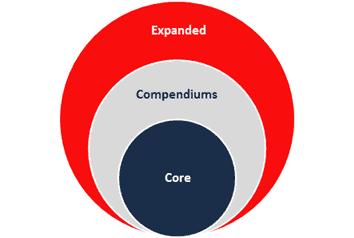
The 2025 SIAM Body of Knowledge core
Over 140 passionate SIAM practitioners volunteered to support the SIAM refresh, guided by a team of dedicated Lead Architects. This group was comprised of Michelle and Simon from Kinetic IT, as well as Claire Agutter from Scopism. Their collective expertise and leadership were instrumental in steering the project through its various phases.
The most significant shift in the 2025 SIAM Body of Knowledge is that the two previously separate books — Foundation and Professional — are now recognised collectively as the Body of Knowledge, forming integral parts of a unified resource. While there are still distinct Foundation and Professional publications, these are no longer standalone but are fully woven into the broader SIAM model. This ensures that the core SIAM principles remain intact, with the emphasis now placed on SIAM as a holistic strategic management approach that closely aligns with business outcomes and the service organisation’s operating model. Specific elements that were overly detailed or subject to frequent change, such as in-depth processes or external practices, have been streamlined or removed, enhancing the Body of Knowledge’s relevance and adaptability in today’s dynamic environment.
Introducing new SIAM compendiums
Encircling the core is the second layer, which includes compendiums. These publications both go deeper and broader. Broader allows us to present topics like AI, experience management or OCM in the context of SIAM. And deeper are whitepaper-like publications on end-to-end measurements, or skills within SIAM.
The compendiums are more agile and can be changed, added or removed frequently, providing up-to-date additional depth and actionable guidance required to implement SIAM effectively in real-world scenarios. We’ve already started working on the next release of additional compendiums.
Download for free
The SIAM Body of Knowledge is — and always will be — free for anyone who’s interested. There’s no big commercial engine behind SIAM, no paywall, no hidden agenda. Just shared knowledge for the benefit of the whole community. And while the Body of Knowledge is free, sadly it doesn’t include Tim Tams… which is unfortunate. But the generosity and intent still stands: open, shared, and continually improved — keeping the ecosystem real, relevant, and powered by practitioners, not profit.
Importantly, every new Compendium includes a dedicated link for readers to provide feedback, fostering a culture of continual improvement and responsiveness to the community’s needs. These feedback channels not only help to refine and update the guidance within each compendium but also offer an open invitation for practitioners to share their own expertise and experiences.
By encouraging contributions, the SIAM Body of Knowledge continues to evolve collaboratively, ensuring it remains relevant and truly representative of the wider SIAM community. It can be found in the global SIAM Community, which has over 4,500 members. The Community hosts regular events, webinars, and socials culminating in the annual Scopism SIAM Service North conference each November. Membership is free, and so is access to most materials.

Michelle Major-Goldsmith and Simon Dorst
Michelle is Director of Service Integration & Systems and Simon is Director of Service Management Education at Kinetic IT.